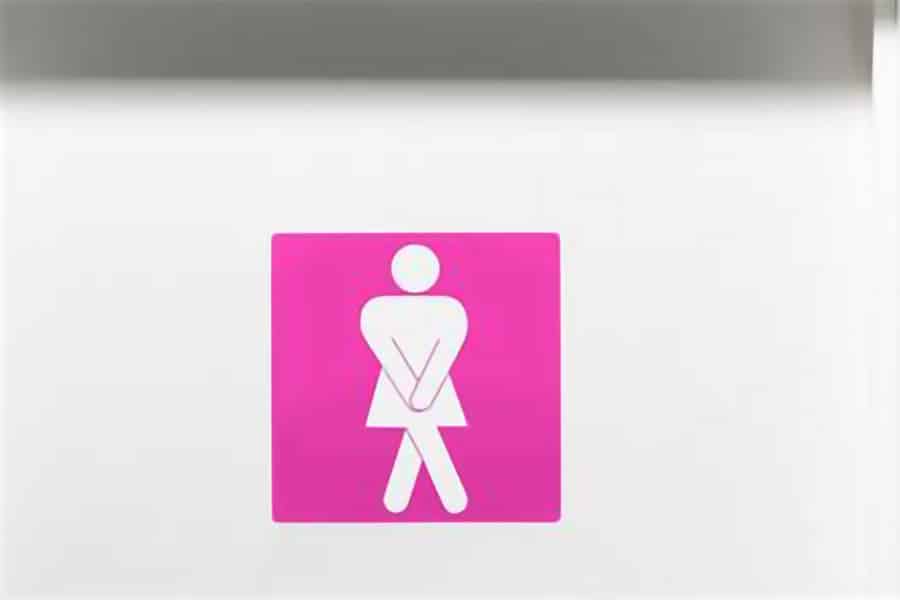
After writing my latest series of articles with sensible, useful titles, I am back to my usual standard! Well, it is a new year and we’re all a little fed up with Covid. Luckily, this article is not about that. This is about forward planning and a sense of reality. What can we do to reduce, or eliminate, the queues that ladies suffer in public facilities?
I, for one, have had plenty of time to think about this topic. Even as a man, this even influences us. Hanging out with your partner in a bar? You’ll be alone for a long period when your other half needs an inevitable pee. Shopping with your daughter, again you’ll be waiting outside the facilities for far longer than if you went on your own. In short, this issue affects us all.
What if I told you that men could solve this problem by being a little more realistic and less selfish? Sure, got your attention. Don’t worry brothers, you’ve done nothing wrong…. unless you’re planning a new facility’s washroom options. See, I solved it.
Unisex toilets have been a debate for the longest time. For many reasons, this is positive and for many reasons, it is not. Personally, I feel this is our future and I believe we can work logically to reduce the perceived safety risk aspect that sits at the core of most objections.
Take statistics. The best place to being our planning. What does the data tell us? Given a rough mean average, we can see people urinate 7.65 (8) times to each defecation. This means that a washroom seeing 200 users per hour (50/50 female/male) will see (8:1 ratio) 89 people urinating and 11 people defecating. You have most likely already seen my point.
We might see 6 cubicles in the ladies’ and 4 cubicles in the men’s with a further 4 urinals. Those 89 men would almost all use the urinals. Being that men only have to lower their fly, pull out their member and urinate versus ladies who would have to get half undressed, you can see why the men’s toilets are woefully under-used.
So, what is my suggestion? Well, gender neutral cubicles in a maze room with a neighbouring maze urinal room. For a start, the maze allows for simpler flow through the washroom environment. If we were to combine the number of cubicles to 10 unisex cubicles, we can see that 111 people (all women and 11 men) will use the cubicle facility. We don’t even need to focus on the urinal room. It will just work. Previously we had 100 women divided by 6 cubicles which gave us 16.7 visitors per cubicle. Now we have 111 users visiting 10 cubicles, which is a smaller number per cubicle. Add your hand hygiene section in a 3rd room that both cubicle and urinal facilities flow into and we now have a good flow and far less likelihood of queueing for cubicles.
I am not alone in my thinking. Having spent so much time waiting for ladies outside toilets in my life, I have had much time to think. Whilst researching my data for this article, I stumbled across a serious study on Phys.org I discovered that some rather mighty minds have also debated this subject. They have come to the same conclusions.
There are many further arguments concerning safety, anxiety and hygiene that are related to unisex options. However, we can address these, on the whole, through planning and decent facility management. The solution described can seldom be retro-fitted. This change must happen in planning to allow designers and architects to ensure simpler facility management. This will lower the likelihood of the disappointing site of women queueing for 30 minutes to use a toilet.
I leave you with a memory of a New Year’s party at a poorly planned venue. The facilities were so inadequate that all the female members of our party got to a point where they were heading off to the toilet at regular intervals to ensure that they didn’t end up desperate. Understandably, they didn’t enjoy their new year’s celebrations at all.
Zenith Washrooms are ready to provide all the options required to make this utopian toileting system a reality. Call us today and we can work with your architects and planners to ensure the most future aware facilities we can imagine.